In recent months, you’ve probably heard a lot about RNA vaccines. But do you know why this technology is ideal for combating viruses like SARS-CoV-2, which have a high mutation rate?
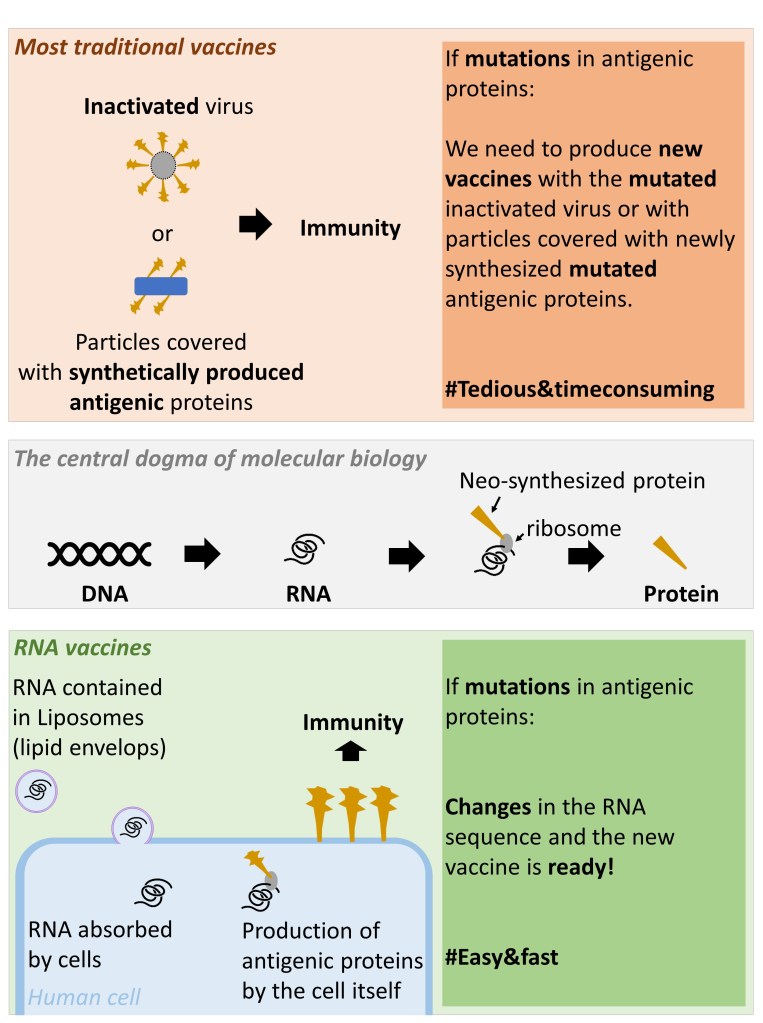
With most viruses, our immune system triggers a response after recognizing their antigenic proteins. Traditional vaccines expose our bodies to some of these proteins using either inactivated viruses or synthetic versions. But if the virus mutates, our immune system may not recognize it, and a new vaccine must be developed. This can take time, as new inactivated viruses or synthetic proteins must be created. This is where RNA vaccines come in.
To understand how RNA vaccines work, we need to understand the central dogma of molecular biology. Our genetic information is stored in the form of DNA, which is used as a template to produce RNA. This RNA is then used by ribosomes to synthesize proteins. RNA vaccines allow our cells to produce antigenic proteins themselves, activating our immune response. Rather than creating proteins in a lab and injecting them, RNA vaccines introduce transient RNA molecules into our cells, resulting in protein production.
The biggest advantage of RNA vaccines is their ability to respond quickly to mutations. Because they use our cells’ protein-synthesis capabilities, changes can be made at the RNA level, and vaccination can begin again. This is particularly useful when dealing with viruses like SARS-CoV-2, which mutate quickly.
So, if you’re wondering why RNA vaccines are making headlines, it’s because they represent a fast and effective way to combat mutating viruses. By harnessing our own cellular machinery, we can create the proteins needed to trigger an immune response, and keep ourselves protected against new strains of the virus.
Photo de Hakan Nural sur Unsplash
 Valentin Hammoudi